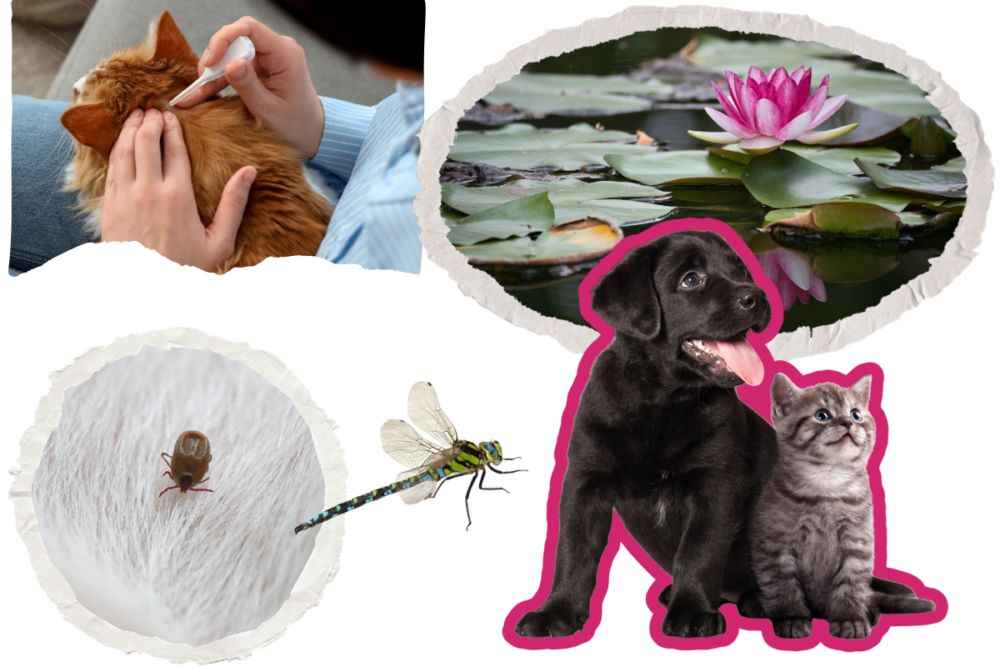
The big impact of your small steps
By following three simple steps, Plan – Apply – Protect,you can:
- ensure your flea and tick spot-on works effectively to protect your pet’s health and welfare
- avoid wasting money
- reduce the risk of diseases spreading to humans and other animals
- limit the amount of insecticides getting into rivers and streams, where they could harm insects that live in water
It’s a win for your pet. A win for your wallet. And a win for the environment.
Plan – Apply – Protect:
Plan
Planning ahead will minimise the risk of the medicine getting on you, around your home or into the environment.
Apply
The medicine needs to reach the skin to be absorbed and spread across your pet’s body.
Applying to fur reduces effectiveness – meaning you may not get the protection you paid for and increasing the likelihood of the medicine ending up in the environment.
Applying to clean, dry skin helps the medicine work as intended.
Protect
When pets swim or are washed after treatment, medicine can wash off into river, streams and other waterways.
Even small amounts have the potential to harm aquatic insects like mayflies, which are an important part of healthy river ecosystems.
Binning used pipettes and fur from treated pets keeps these medicines out of the water system and the wider environment.
Why stewardship? Why now?
What the science tells us
Flea and tick spot-on treatments are safe and effective when used correctly. They play an important role in protecting our pets from parasites and the diseases they can carry. But recent research has raised concerns about what happens to these treatments after they are applied, and what ends up in our rivers and streams.
Two active ingredients found in many spot-on treatments, fipronil and imidacloprid, have been detected in UK waterways at levels that scientists say could be harmful to aquatic insects. These tiny creatures are a vital part of healthy river ecosystems, providing food for fish, birds and other wildlife. When their populations decline, the knock-on effects could be significant.
Research funded by the Veterinary Medicines Directorate (VMD) has found that these substances can enter waterways in two main ways:
- through wastewater such as when a treated pet is bathed or groomed.
- when treated dogs swim in rivers, streams or lakes.
This is why small changes to how we use and dispose of spot-on treatments can make a real difference.
Keeping your pet out of water for at least four days after application and limiting swimming or bathing in the weeks that follow, avoiding bathing or grooming them straight after treatment, and binning used pipettes rather than rinsing them are all simple steps that can help.
Why the product label hasn’t changed
You might be wondering why this guidance isn’t already printed on the packaging.
Changing the label on these veterinary medicines is not straightforward. It requires agreement through international regulatory processes involving bodies like the European Medicines Agency and VICH — the global organisation that sets standards for veterinary medicines. This is a complex process, and it must be consistent across different countries to avoid creating problems with product availability, particularly between Great Britain and Northern Ireland.
In the meantime, the government is taking action now. This campaign shares the latest evidence with pet owners directly, whilst the Veterinary Medicines Directorate (VMD) is also reviewing whether these treatments should require professional advice at the point of sale. The government is also funding ongoing research to better understand the scale of the issue and close remaining evidence gaps.
We are not waiting for the label to change before acting. The guidance on this website reflects the best available evidence and gives you the information you need to use these treatments responsibly, right now.
What we still don’t know
Science rarely gives us all the answers at once, and we want to be honest with you about what remains uncertain. We do not yet have a complete picture of how much contamination comes from veterinary treatments compared with other sources, or the full scale of ecological impact at current concentrations in UK waterways. Research is ongoing, including work through the University of Plymouth, and findings will continue to inform both this campaign and future regulatory decisions.
What we do know is that there are small steps you can take right now to create better outcomes for your pet, our waterways and wildlife.
Pharmaceuticals in Environment Group
The Pharmaceuticals in the Environment (PiE) Group was set up in 2023 as a UK cross-government platform to enable discussion and knowledge exchange relating to pharmaceuticals in the environment from human, veterinary and, where there is cross over, agricultural and non-agricultural sources.
In 2025 the group published a roadmap of activities to address the levels of
fipronil and imidacloprid detected in UK waterways.